Whenever we play a game, what attracts us the most? It’s the game mechanics and, of course, how it looks. Both of these aspects play a vital role in game development. And as an entrepreneur, you need to understand these roles, whether you’re planning a hyper-casual game like Angry Birds, building a cross-platform mobile game, or working on an immersive metaverse experience.
This blog is a perfect guide for every startup and existing entrepreneur who is keen to develop their own game. You will get to know what a game designer and developer do, the major differences, and the cost of game design and development as well.
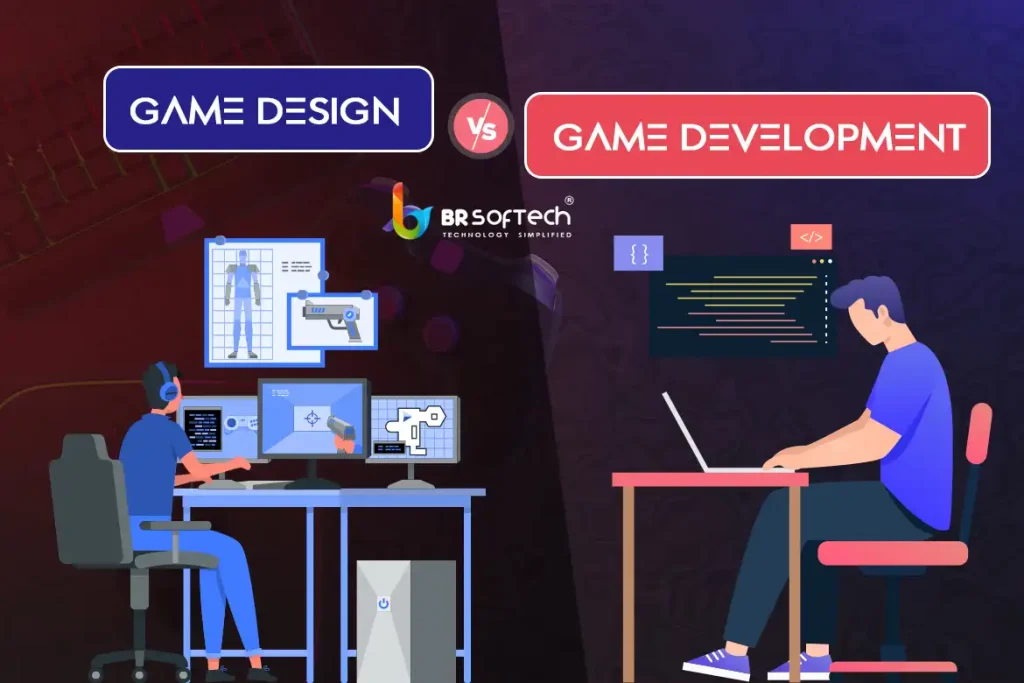
A game designer is responsible for making a title more attractive and captivating in the eyes of the players. They plan and decide how the game, the characters, and the environment will look. Along with the creative side, they also design the game rules, patterns of gameplay, and the systems.
Along with the creative part, the developers are mainly responsible for handling the technical part of the game. It includes game programming, testing, designing game mechanics and levels, and the most important part is ensuring quality and stability across different platforms.
Key Components of Game Development
Programming & Scripting: Using languages like C#, C++, Java, or TypeScript to build gameplay mechanics and interactions.
Game Engine Implementation: Working inside engines such as Unity, Unreal Engine, Godot, or custom in-house engines.
Physics & Animation Integration: Ensuring movement, collisions, effects, and gameplay responses feel natural and consistent.
Asset Integration: Implementing 2D/3D models, UI elements, audio, and animations created by artists.
Difference between Game Designer and Game Developer
Always a battle between game designer vs game developer, though both of these are essential for creating a successful game. Majorly, the difference is measured between the three categories: scope of work, salaries, skills, and tools.
Category
Game Designer Details
Scope of Work
Create core gameplay mechanicsDevelop story, gameplay loops, characters & levelsDesign UX flow and user journeyBalance game economy, rewards & difficultyPrepare the Game Design Document (GDD)Conduct competitor & player psychology analysis
Salary
Entry-Level: ModerateMid-Level: Strong demand in indie & mid-size studiosSenior-Level: High, especially in systems design, economy design & UX design roles
Write code for gameplay mechanicsIntegrate animations, physics, UI & audioBuild systems using Unity/Unreal/GodotOptimize performance (FPS, loading, memory)Debug and fix issuesDevelop backend/API features for multiplayer, leaderboards, and cloud saves
Salary
Entry-Level: Higher than designers due to technical demandMid-Level: Rapid salary growth as tech stack expandsSenior-Level: High, especially for Unreal devs, backend engineers & technical leads
Skills & Tools Required
Skills: Programming (C#, C++, JS, Python), math & physics, engine architecture, AI scripting, debugging, performance optimization, version controlTools: Unity, Unreal Engine, Visual Studio, Rider, VS Code, Git/GitHub, SDKs/APIs, Profilers & debuggers
Growth Potential in Game Design vs Game Development
Whether it’s hyper-casual, VR/AR, or AI-driven games, there is a high demand for every genre in this competitive gaming environment. And to create these top-notch games, there has always been a need for a game designer and developer.
Growth Potential for Game Designers
Game designers are counted among the most valuable people in startups and entrepreneurship. Now, along with the game mechanics, the titles are becoming player-centric with a captivating gaming environment, which results in player retention growth.
Why are Game Designers in Demand?
Games like hyper-casual and casual games require fast and creative iteration.
In F2P games, you will witness a great demand for system designers and economy designers.
Growing value in UX-focused design for better player retention.
Career Growth Paths
Game Designer – Senior Game Designer – Lead Designer – Creative Director
Level Designer- Senior Level Designer – World Designer
System Designer – Economy Designer – Monetization Strategist
High-growth areas:
Mobile F2P design
Game economy & monetization
Narrative design for AI-driven worlds
UX + game psychology integration
What is the Growth Potential For Game Developers?
The tech-driven side of gaming is known as one of the fastest-growing domains. You can explore opportunities in graphics technology, multiplayer architecture, and real-time engine. Advanced developers with strong technical skills continue to be in extremely high demand.
Why are game developers in demand?
Cross-platform games are in much demand (mobile, console, PC)
Gaming engines like Unreal Engine 5, Unity DOTS, and multiplayer frameworks create demand for skilled programmers.
AI-assisted game development tools are responsible for creating productivity while expanding what developers can build.
AR/VR development is growing rapidly in gaming, training, and enterprise solutions.
Career Growth Plans for the Developers
Game Developer – Senior Developer – Lead Programmer – Technical Director
Unity/Unreal Developer – Engine Specialist – Technical Artist
Gameplay Programmer – AI Programmer – Multiplayer/Backend Engineer
High-growth areas:
Multiplayer server engineering
Unreal Engine 5 development
AI/ML-based game systems
VR/AR immersive development
Which Role Has Higher Growth? Game Design vs Game Development
In a successful game development process, the game designer and the game developer equally play a vital role. Both show strong industry demand, however, for different reasons:
Mostly, the games rely more on engagement and monetization strategies. While the developers have a higher technical ceiling, they typically earn more due to programming complexity. For startups and entrepreneurs, it is impossible to create any game without these two professionals.
What is the Cost of Game Design and Development?
If you are planning to create a dynamic game that stands out from the crowd, then understanding the cost of game design and development is essential. Generally, the cost of the game depends on complexity, art, features, technology stack, and the experience level of the team. Below is a breakdown to help you estimate your budget more accurately.
Total Estimated Cost for Game Development
Game Type
Typical Total Cost
Hyper-casual (e.g., Angry Birds)
$8,000 – $30,000
Casual/Mid-core Mobile Game
$20,000 – $100,000
Multiplayer or Online Game
$60,000 – $250,000+
High-End 3D / PC / Console
$150,000 – $500,000+
Total Estimated Cost for Game Design
Game Type
Typical Total Cost
Hyper-casual Game (e.g., Angry Birds)
$3,000 – $10,000
Casual/Mid-core Mobile Game
$8,000 – $25,000
Multiplayer or Complex F2P Game
$20,000 – $50,000+
High-End 3D / Console / AAA
$50,000 – $200,000+
Combined Cost Summary (Design + Development)
Game Type
Total Cost (Design + Development)
Hyper-casual Game
$10,000 – $40,000
Casual/Mid-core Game
$30,000 – $125,000
Multiplayer/Online Game
$80,000 – $300,000+
High-End 3D/AAA Game
$200,000 – $700,000+
Conclusion: Searching for a Game Designer or a Developer
Understanding the difference between game design vs is crucial for creating a scalable game for your players. Whether you’re launching your first hyper-casual title or planning a long-term gaming product. The game designers shape the game vision and mechanics, while the developers turn that vision into a fully functional reality. Being an entrepreneur, it is important to choose an efficient team for your project. As a professional game development company, we support you at every stage of your game development journey, ensuring your idea evolves into a market-ready product with strong gameplay, smooth performance, and long-term growth potential.
Frequently Asked Questions(FAQs)
Q. Which role earns more: game designer or game developer?
Ans. Generally, game developers earn more due to the technical complexity of programming and the demand for specialized skills (Unreal, multiplayer, backend, AI). However, senior designers, especially in systems, economy, and UX, can also earn high salaries depending on the studio and game type.
Q. Do startups need both a game designer and a game developer?
Ans. Yes. A successful game requires both. Designers create the vision, mechanics, progression, monetization, and gameplay loops. Developers implement these ideas through coding and technical execution. Lacking either role can reduce quality, player retention, or performance.
Q. Can one person be both a game designer and a game developer?
Ans. Yes, especially in indie or small teams. These hybrid professionals are often called game creators, technical designers, or Unity generalists. However, in mid-size and AAA studios, roles are more specialized due to the complexity of each discipline.
Q. How do game designers and developers collaborate during production?
Ans. Designers create documentation, gameplay loops, UX flow, and levels. Developers interpret these requirements and build the systems. Both roles rely on continuous communication using design documents, task boards, prototypes, and playtesting sessions.
Q. Which tools are mostly used in game design?
Ans. Figma, Photoshop, Illustrator, Miro, Whimsical, Unity (for prototypes), and spreadsheets for economy balancing. Designers may also use level editors and narrative design tools.
Q. What is playtesting and why is it important?
Ans. Playtesting involves real players evaluating the game. It helps designers and developers refine difficulty, mechanics, controls, and overall fun. This step significantly improves retention and user satisfaction.
Nitin Garg is a seasoned tech entrepreneur and the visionary founder of BR Softech, a globally recognized leader in game development. With over 13 years of industry experience, he has been instrumental in transforming BR Softech into a powerhouse of innovation, offering cutting-edge solutions in Video Games, Blockchain Games, NFT Game Development, and card games like Poker, Rummy, and Teen Patti.
Nitin’s deep expertise in emerging technologies, combined with a sharp business acumen, has helped position BR Softech as a trusted name in the international gaming arena. Under his leadership, BR Softech has built a global clientele of 3,000+ satisfied customers and scaled a dedicated in-house team of 180+ skilled professionals.