The bingo game industry has experienced remarkable growth in recent years, transforming from traditional community halls to sophisticated digital platforms. According to market research, the lottery and bingo market is projected to reach US$167.47 billion by 2029, with the United States expected to generate approximately US$39.61 billion by 2025. This explosive growth has prompted many entrepreneurs and businesses to explore bingo game development as a lucrative business opportunity.
However, one of the most pressing questions for anyone entering this market is: how much does it actually cost to build a bingo game? The answer isn’t straightforward, as numerous factors influence the final price tag. This comprehensive guide will walk you through everything you need to know about bingo game development costs, from basic estimates to advanced features, helping you make informed decisions for your project.
Before diving into costs, it’s essential to understand what bingo game development entails. Modern bingo games are far more complex than their traditional counterparts. They require secure servers, real-time multiplayer features, cloud integration, payment systems, and engaging user interfaces. The cost of bingo game app development varies significantly based on whether you’re creating a simple single-player version or a feature-rich multiplayer platform.
Bingo game development involves several key stages, including concept design, platform selection, UI/UX design, backend development, frontend coding, testing, deployment, and ongoing maintenance. Each stage contributes to the overall investment required to bring your vision to life.
Cost Breakdown by Complexity Level
The cost to build a bingo game can be categorized into three primary tiers based on complexity and features. Understanding these tiers will help you determine which option best suits your budget and business goals.
Basic Bingo Game ($5,000 – $15,000)
At this level, the bingo game development cost ranges from $5,000 to $15,000. This entry-level option is perfect for startups or businesses testing the market before making larger investments. A basic bingo game typically includes essential features and targets a single platform (either Android or iOS). These features are:
Single-player mode with AI opponents
Basic 2D graphics and simple animations
Standard bingo variants (75-ball or 90-ball)
Simple user interface
Basic sound effects
Limited customization options
Intermediate Bingo Game ($15,000 – $40,000)
For businesses seeking more features and a wider reach, the intermediate tier offers substantial value. The cost to build a bingo game at this level ranges from $15,000 to $40,000, providing cross-platform compatibility and enhanced features that significantly improve user engagement. The features of the Intermediate Bingo Game are:
The premium tier represents the pinnacle of bingo game development, offering enterprise-level features and scalability. The cost of bingo game app development in this category starts at $40,000 and can exceed $80,000 depending on customization requirements. This investment is ideal for established businesses or serious entrepreneurs looking to capture significant market share. Its features include:
Full cross-platform compatibility (Android, iOS, Web, Desktop)
Advanced real-time multiplayer with thousands of concurrent users
Key Factors Affecting the Cost to Build a Bingo Game
Understanding the factors that influence bingo game development cost is crucial for accurate budgeting. Here are the primary considerations that will impact your investment:
1. Platform Selection
Choosing a platform drastically affects bingo game costs. Developing for one platform (Android or iOS) is much cheaper than cross-platform. Traditional board game apps cost $10,000-$30,000; online bingo with multiplayer can exceed $50,000 because of server and cloud needs.
Web-based platforms require different technical considerations than mobile apps, while desktop applications demand additional development resources. Many businesses opt for a multi-platform approach to maximize user reach, though this increases initial costs while expanding potential revenue streams.
2. Design Complexity and Graphics Quality
The visual appeal of your bingo game influences development costs. Basic 2D graphics and simple animations are inexpensive, while high-quality 3D graphics, custom animations, and immersive effects need specialized designers and more time. Costs rise sharply when adding advanced visuals that boost engagement and retention.
Professional UI/UX design is critical for success. Investing in intuitive interfaces, smooth navigation, and visually appealing elements ensures players enjoy their experience and return frequently. Quality design work requires skilled professionals using industry-standard tools like Figma and Adobe Illustrator.
3. Technology Stack and Game Engine
The chosen technology stack impacts development and maintenance costs. Game engines like Unity and Unreal offer pre-built tools that reduce time and expenses but need specialized developers, possibly affecting rates.
Backend technologies such as databases (MySQL, PostgreSQL, Oracle), languages (Java, Node.js), and cloud services (AWS, Google Cloud, Azure) influence the cost of building a bingo game. Features like real-time multiplayer need a scalable backend infrastructure.
4. Feature Set and Functionality
Your features significantly impact development costs. Standard features include number calling, card marking, and win verification. Extra features like chat, social media, payment gateways, admin panels, analytics, and AI personalization increase costs.
Advanced monetization features, including in-app purchases, subscription models, ad integration, and real-money gaming capabilities, require additional development effort and regulatory compliance, further increasing costs.
5. Development Team Location and Expertise
Geographic location significantly impacts development costs. Development teams in different regions charge varying rates:
India: $10,000 – $12,000 for basic projects
United Kingdom: $20,000 – $25,000 for a similar scope
United States: $30,000 – $40,000 for comparable features
Offshore development saves costs, but watch for communication, time zones, and quality. Experienced developers cost more but often work better and faster.
6. Testing and Quality Assurance
Thorough testing is really important to ensure a smooth, safe gaming experience for everyone. Including checks such as functional testing, performance testing, security audits, and user acceptance testing usually accounts for about 15-20% of the total development budget.
Skipping these steps might save some money upfront, but it can end up costing a lot more later with fixes after launch and can harm your reputation.
The development timeline directly correlates with the cost to build a bingo game, as longer projects require more resources and developer time. Understanding realistic timelines helps with project planning and budget allocation:
Basic Bingo Game: 3-6 weeks for single-platform development with essential features
Intermediate Bingo Game: 8-12 weeks for cross-platform development with enhanced features
Advanced Bingo Game: 14-24+ weeks for complex, feature-rich platforms with custom functionality
These timelines can vary based on team size, complexity of requirements, client feedback cycles, and any unexpected technical challenges that arise during development.
Monetization Strategies to Maximize Return on Investment
Understanding monetization options is crucial when evaluating the cost of bingo game app development against potential returns. Successful bingo games employ multiple revenue streams. Let’s check them out.
In-App Purchases
Offering optional items like boosters, extra cards, special themes, and power-ups generates revenue without affecting gameplay fairness. Players appreciate the ability to enhance their experience through purchases while maintaining free-to-play access.
Advertisement Integration
Display ads, interstitial ads, and rewarded video ads provide passive income streams. Rewarded videos are particularly effective, offering players in-game benefits in exchange for watching advertisements, creating value for both users and developers.
Premium Subscription Plans
Monthly or annual subscriptions offering exclusive benefits such as ad-free experiences, bonus rewards, special rooms, and premium features generate recurring revenue and foster player loyalty. This predictable income stream helps offset the initial cost to build a bingo game.
Tournament Entry Fees
Hosting competitive tournaments with entry fees creates engagement while generating revenue. Players compete for prizes, creating excitement and encouraging regular participation.
Strategies to Reduce Development Costs
While quality shouldn’t be compromised, several strategies can help optimize your bingo game development cost without sacrificing essential features:
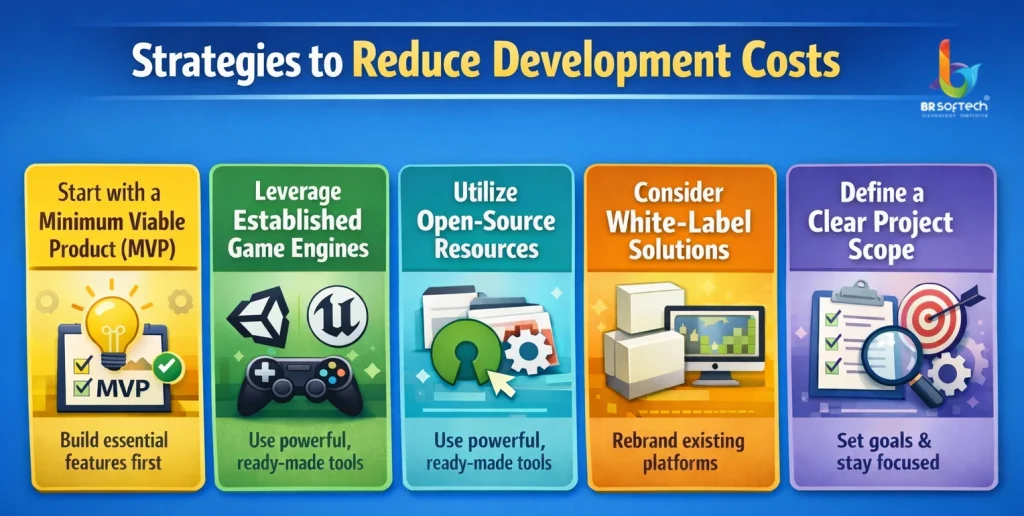
Start with a Minimum Viable Product (MVP)
Launching with core features allows you to test market reception before investing in advanced functionality. This approach reduces initial costs significantly while providing valuable user feedback to guide future development priorities. You can add features iteratively based on player demand and usage analytics.
Leverage Established Game Engines
Using proven game engines like Unity or Unreal Engine saves substantial development time and costs. These platforms provide pre-built tools, libraries, and frameworks that accelerate development while ensuring stability and performance across multiple platforms.
Utilize Open-Source Resources
Free and affordable open-source graphics, sound libraries, and code frameworks can significantly reduce costs without compromising quality. Many high-quality resources are available through Creative Commons licenses, allowing commercial use with proper attribution.
Consider White-Label Solutions
White-label bingo platforms offer pre-built solutions that can be customized with your branding. While this limits uniqueness, it dramatically reduces both development time and costs, allowing faster market entry with a proven product.
Define a Clear Project Scope
Establishing a detailed project scope from the outset prevents costly scope creep and miscommunication. Clear requirements documentation ensures developers understand expectations, reducing revisions and delays that increase the cost to build a bingo game.
Selecting the Right Development Partner
Choosing the right game development company significantly impacts both the cost of bingo game app development and the quality of your final product. Consider these factors when evaluating potential partners:
Portfolio and Industry Experience
Review the company’s portfolio of completed bingo game projects. Companies with proven track records in gaming, particularly bingo development, bring valuable expertise and can anticipate challenges, ultimately saving time and money during development.
Technical Capabilities
Ensure the development team has expertise in your required technology stack, including game engines, backend systems, payment integration, and security protocols. Technical proficiency directly affects development efficiency and product quality.
Communication and Post-Launch Support
Effective communication throughout development prevents misunderstandings and costly revisions. Additionally, inquire about post-launch support, maintenance packages, and update services. Ongoing technical support is essential for addressing bugs, implementing updates, and ensuring long-term success.
Transparent Pricing Structure
Look for development partners who provide detailed cost breakdowns and transparent pricing. Understanding exactly what you’re paying for helps avoid unexpected expenses and ensures alignment with your budget constraints.
Hidden Costs to Factor Into Your Budget
Beyond the obvious development costs, several additional expenses contribute to the total cost to build a bingo game. Planning for these ensures accurate budgeting:
Server and Hosting Costs: Monthly server fees for cloud infrastructure, particularly for multiplayer games with high traffic
App Store Fees: Annual developer program fees for Apple App Store ($99/year) and Google Play Store ($25 one-time)
Payment Gateway Charges: Transaction fees for processing in-app purchases and payments (typically 2-5% per transaction)
Marketing and User Acquisition: Costs for promoting your game and acquiring users through advertising campaigns
Maintenance and Updates: Ongoing costs for bug fixes, feature updates, and server maintenance (typically 15-20% of initial development cost annually)
License and Compliance Fees: Regulatory compliance costs if operating in jurisdictions with gaming regulations
Customer Support: Resources for handling user inquiries, technical support, and community management
Future Trends Affecting Development Costs
Emerging technologies are reshaping the bingo game landscape and influencing the bingo game development cost. Understanding these trends helps future-proof your investment:
Blockchain and Cryptocurrency Integration
Blockchain technology enables transparent, secure gaming experiences with cryptocurrency transactions. While blockchain integration increases development costs, it also offers unique value propositions, including provably fair gameplay, instant payouts, and global accessibility without traditional banking limitations.
Artificial Intelligence and Personalization
AI-powered features, including personalized game recommendations, dynamic difficulty adjustment, and predictive analytics – driven by bingo AI trends and personalization – enhance user engagement. While AI implementation increases development costs, it significantly improves player retention and lifetime value.
Virtual and Augmented Reality Experiences
VR and AR technologies create immersive bingo experiences that replicate the social atmosphere of traditional bingo halls. Though these technologies substantially increase the cost to build a bingo game, they offer differentiation in an increasingly competitive market.
Cost Comparison: Quick Reference Guide
Here’s a comprehensive comparison of development costs across different complexity levels:
Complexity Level
Cost Range
Timeline
Best For
Basic
$5,000 – $15,000
3-6 weeks
Startups, MVPs, market testing
Intermediate
$15,000 – $40,000
8-12 weeks
Growing businesses, cross-platform needs
Advanced
$40,000 – $80,000+
14-24+ weeks
Established companies, market leaders
Conclusion
Building a bingo game costs $5,000 for basic to over $80,000 for advanced versions. Costs depend on platform, design, features, team skills, and maintenance. Success requires careful planning, clear requirements, and the right bingo game development company. Start with a defined MVP to test the market, then refine through user feedback and analytics. Use existing engines and open-source tools to lower costs without sacrificing quality.
The bingo market is projected to reach $167.47 billion by 2029, and well-made games can generate significant returns through in-app purchases, subscriptions, advertising, and tournament fees.
You’re now equipped to make informed decisions about your bingo game development project. Whether you’re creating a simple entertainment app or a sophisticated multiplayer platform, careful planning and strategic investment will position your bingo game for success in this thriving market.
Frequently Asked Questions(FAQs)
What is the average cost to develop a bingo game app?
The cost to develop a Bingo game app varies. Typically, a basic single-platform Bingo game app costs between $5,000 and $10,000. For more advanced features, the investment increases to approximately $20,000 to $30,000.
How long does it take to build a bingo game app?
Developing a Bingo game app from scratch typically takes about 2 to 3 months. However, the overall timeline may extend depending on the complexity of the project game.
What factors affect the cost of developing a bingo game app?
Our blog outlines all the factors influencing the cost of developing a Bingo game app. Key considerations include game complexity, platform compatibility, UI/UX design, and the chosen technology stack.
Can I develop a bingo game app for both Android and iOS?
Yes, we can create a cross-platform Bingo game app that works on both Android and iOS. However, be aware that developing for both platforms will notably raise the overall development costs.
How can I monetize a bingo game app effectively?
Fortunately for operators, an online Bingo game app can utilize multiple monetization methods such as in-app purchases, advertisements, brand collaborations, and partnerships with popular apps.
Nitin Garg is a seasoned tech entrepreneur and the visionary founder of BR Softech, a globally recognized leader in game development. With over 13 years of industry experience, he has been instrumental in transforming BR Softech into a powerhouse of innovation, offering cutting-edge solutions in Video Games, Blockchain Games, NFT Game Development, and card games like Poker, Rummy, and Teen Patti.
Nitin’s deep expertise in emerging technologies, combined with a sharp business acumen, has helped position BR Softech as a trusted name in the international gaming arena. Under his leadership, BR Softech has built a global clientele of 3,000+ satisfied customers and scaled a dedicated in-house team of 180+ skilled professionals.