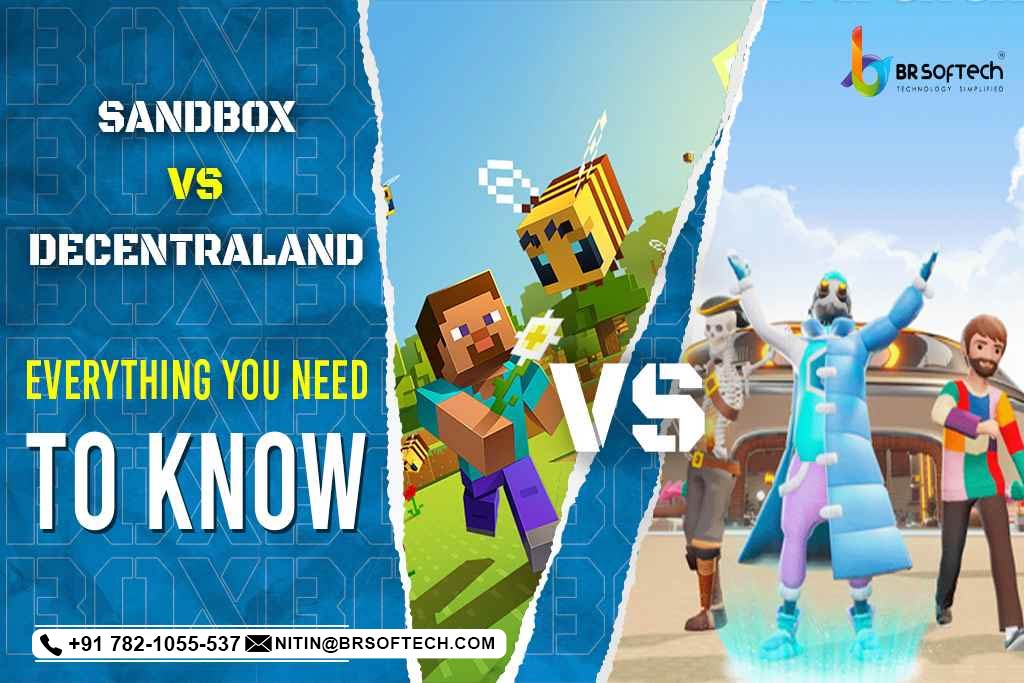
Metaverse gaming is the trend of this competitive gaming industry. Along with billions of users, it is gaining the attention of entrepreneurs as well. They are keen to invest in these games. But the very first question that comes to their mind is what to use, Sandbox or Decentraland.
The comparison between Decentraland vs Sandbox will always be on the top if you are planning to create a metaverse game. If you are confused between these two, then this blog is a goldmine for you. Here you will get to know everything about these two ecosystems.
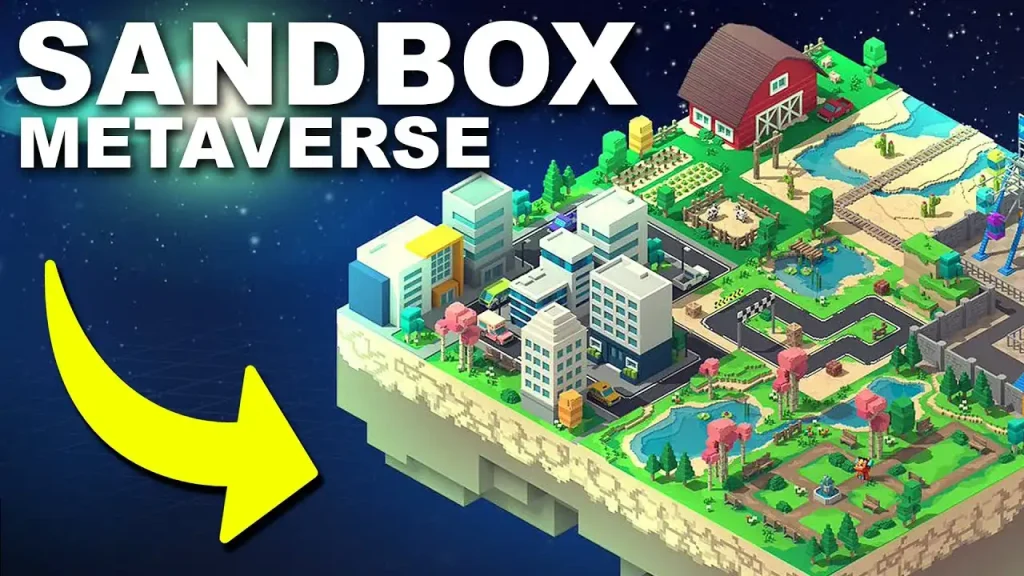
First launched as a mobile game in 2012, then transformed into a blockchain-based 3D virtual world in 2018 by Anomica Brands. In this Ethereum blockchain-based platform, players can not only buy or sell NFTs but also create immersive games by using their creativity.
In the Sandbox, NFTs like land, items, and avatars hold a unique identity. The best part about this is, the players have ownership of their creations and assets.
What are the Features of Sandbox?
In the comparison of Decentraland vs Sandbox, this ecosystem consists of various benefits. Let’s get to know the key highlights of this ecosystem.
Virtual Land Ownership
Players have true ownership of digital land in the sandbox, represented as an ERC-721 NFT in the Sandbox. Here you can rent, sell, buy, and even build LAND like a real-world property. LAND scarcity adds investment value, making it a digital asset with long-term ROI potential.
No Code Game Creator
A person with zero coding knowledge can also create games on the sandbox; they can design interactive 3D games and experiences. It offers a drag-and-drop interface with voxel-based assets. The entrepreneurs directly publish the game on their own LAND. You can monetize your game with entry fees, NFTs, or SAND rewards, one of the most convenient ways.
Play-To-Earn Model
This is one of the crucial questions among entrepreneurs who are confused about Sandbox vs Decentraland. In the sandbox, the players get the opportunity to earn real value by participating in Sandboxgames and completing challenges. They can earn SAND tokens through gameplay, content creation, and staking. Considered a sustainable economic model for both gamers and investors.
Multiplatform Interoperability
Sandbox supports cross-platform compatibility, which allows users to access their NFTs and avatars across multiple platforms and metaverse ecosystems, encouraging its long-term scalability and business potential.
What Tokens are Used in Sandbox?
Sandbox uses multiple tokens in its ecosystem, which offers true ownership to the players. Here is the list of tokens given below.
Token / NFT
Type
Function
Key Utility
SAND
ERC-20
Utility & Governance
Transactions, staking, and voting
LAND
ERC-721
Virtual Real Estate
Ownership, development, and monetization
ASSETS
ERC-1155
In-Game NFTs
Characters, items, and structures
GEMs & CATALYSTs
ERC-20
NFT Enhancements
Define NFT attributes and rarity
What is Decentraland?
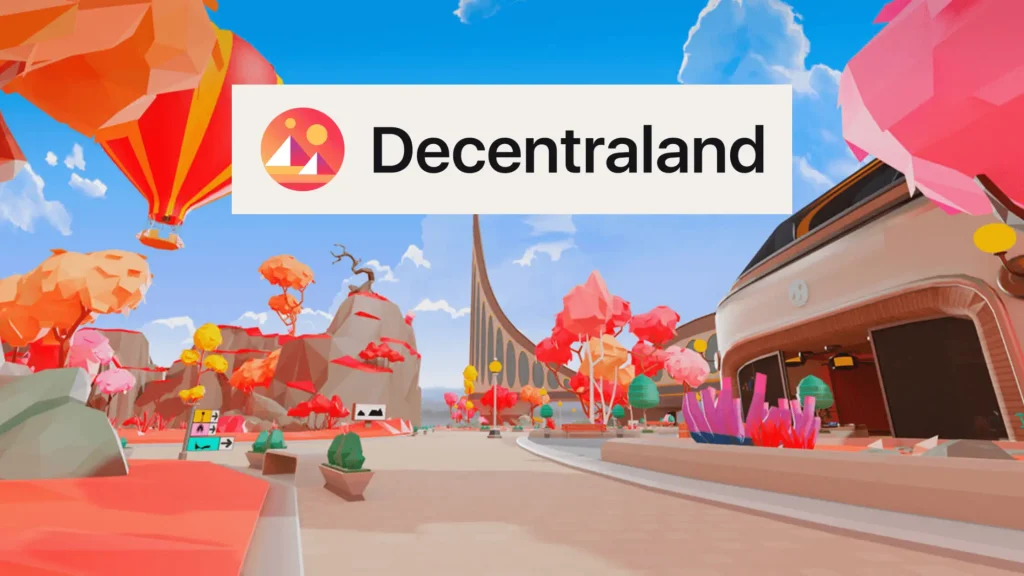
Launched in the year 2020 by the Decentraland Foundation. This ecosystem is built on the Ethereum blockchain, which allows users to create, explore, and monetize their games in a decentralized environment. Here, they have full ownership of their gaming landscape.
In Decentraland vs Sandbox, the players can create a 3D environment where every avatar, land, and object is an NFT. Along with players, the developers can also purchase virtual land, build interactive experiences, and host events of art galleries, casinos, branded showrooms and social hubs.
What are the Features of Decentraland?
Features of Decentraland are not only for players but also for business owners and creators. They can fully engage with the platform, create unique digital experiences, and profit from virtual real estate and assets. Here are some of its key features that set it apart.
Decentralized Governance (DAO)
MANA token holders can participate in decision-making processes by voting on platform proposals, upgrades, and changes to the rules. And community-led development ensures that the platform grows in a way that reflects the desires and needs of the users rather than a centralized corporate entity.
Market Place for Digital Assets
Decentraland consists of a wide marketplace where users can buy, sell, and trade various digital assets like LAND, wearables, avatars, emotes, and other digital creations. The advantage of decentraland is that the marketplace operates directly on the Ethereum blockchain, ensuring authenticity, scarcity, and ownership of assets. The assets, like 3D models, a building, and even virtual fashion, can be monetized.
Customizable Avatars and Wearables
The avatars with digital wearables can be customized in Decentraland. Wearables like clothing, accessories, and a full-body suit. Not only the avatars, the wearables are denoted as the NFTs, which allows users to buy, sell, and trade them in the marketplace.
Smart Contract and DAPP Integration
Smart contracts work on the Ethereum blockchain to ensure transparency and security in transactions. It automates a variety of tasks, like asset sales, NFT transfers, and event ticketing. Developers are also privileged to build decentralized applications within Decentraland, offering additional layers of functionality for users and businesses to integrate.
What Tokens are Used in Decentraland
Here, tokens are basically the NFTs that are used by the players in a game. Here is the list of tokens that Decentraland offers.
Token / NFT
Type
Purpose / Utility
MANA
ERC-20
Native utility token used for transactions, governance, and purchasing virtual assets.
LAND
ERC-721
Represents virtual land parcels that can be owned, built on, or sold.
ESTATES
ERC-721
Group multiple LAND parcels for large-scale virtual projects.
WEARABLES
ERC-1155
NFT-based avatar accessories and fashion items.
NAMES
ERC-721
Unique user or brand identifiers within Decentraland.
Decentraland vs Sandbox: A Comprehensive Differentiation Between These Two
Every ecosystem is different in its own way, as it carries different features, tools, and templates. Below is the detailed differentiation of these two. Let’s check them out:
Category
The Sandbox
Decentraland
Overview
A community-driven gaming metaverse built around voxel assets, game creation, and play-to-earn mechanics.
A fully decentralized virtual world focused on social interaction, virtual events, and digital real estate ownership.
Foundation Year
2012 (rebranded as a blockchain project in 2018)
2017 (publicly launched in 2020)
Developer / Organization
Developed by Pixowl and owned by Animoca Brands.
Created by the Decentraland Foundation and governed by the Decentraland DAO.
Underlying Blockchain
Ethereum, with support for Polygon, aims to reduce gas fees and increase transaction speed.
Ethereum-based, using IPFS for decentralized data storage.
Primary Token
SAND (ERC-20) – Used for purchases, staking, and governance.
MANA (ERC-20) – Used for transactions, governance, and marketplace purchases.
NFT Assets
LAND (ERC-721), ASSETS (ERC-1155), AVATARS, and GEMS/CATALYSTS for asset customization.
LAND (ERC-721), ESTATES (ERC-721), WEARABLES (ERC-1155), and NAMES (ERC-721).
Land Supply
166,464 LAND parcels (each 96m x 96m).
90,601 LAND parcels (each 16m x 16m).
Ownership Model
Semi-decentralized – users own NFTs, but the platform still manages key development.
Fully decentralized – governed and operated via the DAO.
Content Creation Tools
VoxEdit (3D voxel asset creator) and Game Maker (no-code experience builder).
Builder Tool (visual drag-and-drop) and SDK (for scripted, interactive content).
Programming Language / SDK
Game Maker uses visual scripting, C#, and Unity engine integration in development.
SDK uses TypeScript, allowing full control over logic and interactions.
Marketplace Features
Users can buy/sell LAND, ASSETS, and NFTs using SAND.
Users can trade LAND, WEARABLES, and NAMES using MANA.
Governance Mechanism
Token holders can vote via Sandbox DAO (in development).
Fully functional Decentraland DAO controls treasury, policy, and proposals.
Graphics Style
Voxel-based (Minecraft-like) visual environment.
Realistic 3D with a smoother, more immersive aesthetic.
Accessibility
Requires installation of The Sandbox app (currently PC-based).
Browser-based (no downloads), easily accessible through a Web3 wallet.
Target Audience
Game developers, artists, and NFT creators.
Enterprises, brands, and community-driven creators.
Recommendation to Entrepreneurs: Which to choose
In the comparison of Decentraland vs Sandbox, it can be a bit difficult for entrepreneurs to choose one. In my opinion, the business owner should choose based on their business goals, target audience, and brand engagement. Both platforms are leading players in the metaverse ecosystem, but they cater to different entrepreneurial use cases.
Choose Sandbox If…
If your game includes interaction, NFT commerce, or user-generated gaming content, The Sandbox is the right metaverse for you. Sandbox is preferred for entrepreneurs who want to:
Create play-to-earn experiences or launch a gaming ecosystem
By using VoxEdit or Game Maker, creating voxel-based NFT assets
Collaborate with gaming brands or entertainment IPs (Atari, Warner Music, Ubisoft)
Monetize their game by player engagement, game publishing, and in-game item sales
Bild gamified brand experiences targeting Gen Z and the Web3 gaming audience
Choose Decentraland If…
If more than gaming, your business focuses on marketing, brand, or social engagement, then Decentraland can be a wise choice. It is better for entrepreneurs who:
Host virtual events, exhibitions, or fashion shows
Build branded showrooms or digital headquarters for customers and communities
Engage with global audiences through social events and immersive storytelling
Participate in DAO governance and influence the platform’s future direction
Why Choose BR Softech for a Better Gaming Experience?
At BR Softech, we specialize in fulfilling the requirements of entrepreneurs and startups regarding their metaverse game development across platforms like Sandbox and Decentraland. If you want to launch a play-to-earn game, develop a virtual showroom, or create immersive brand experiences, our team of skilled developers, creative designers, and blockchain developers provides end-to-end metaverse development solutions tailored to your business goals.
Key Takeaways
In this blog, we have covered everything related to Sandbox vs Decentraland. Both of these are specific in their own way. Here, the key highlights are:
Role of Sandbox
Feature of Sandbox
What is Decentraland
Tokens of Decentraland
Decentraland vs Sandbox
Conclusion
Metaverse games are at the forefront of the gaming industry. Decentraland and Sandbox are playing a helping hand in bringing these metaverse games to the pinnacle of success. Sandbox empowers creators and gamers to design interactive, play-to-earn worlds. Decentralland offers a socially-driven, decentralized metaverse where brands, investors, and communities thrive through ownership and engagement.
Frequently Asked Questions (FAQs)
Is it expensive to start a business in Sandbox or Decentraland?
Ans. Startup costs depend on the scale of your project. Buying LAND can range from a few hundred to several thousand dollars, depending on location. Development costs vary based on the complexity of your game or virtual space. Working with BeSoftech helps optimize costs by providing scalable, blockchain-ready metaverse solutions that deliver long-term value.
Which metaverse is better for marketing and brand engagement?
Ans. For brand storytelling and marketing, Decentraland is more effective. It’s built for social events, exhibitions, and branded experiences. If your goal is gamified engagement or interactive campaigns, The Sandbox is stronger. Many brands combine both to get the best of marketing and gameplay engagement.
What is the long-term ROI for metaverse businesses in 2026 and beyond?
Ans. Both metaverses offer high long-term potential. Sandbox generates ROI through NFT sales and gaming engagement, while Decentraland drives profits via brand presence and digital real estate. With expert guidance from BR Softech, entrepreneurs can build scalable metaverse ecosystems that ensure sustainable returns as Web3 adoption continues to grow.
How are Metaverse lands taxed?
Ans. Metaverse land is treated as a digital asset, and profits from selling it can be subject to capital gains tax. In most regions, you must report profits earned from selling land, NFTs, or other virtual goods for fiat currency. Typically, this is taxed at around 20–30%, depending on local regulations. Entrepreneurs should consult a tax expert familiar with crypto assets to ensure compliance when operating or selling digital properties on platforms like Sandbox or Decentraland.
Which platform offers better monetization opportunities?
Ans. The Sandbox offers higher flexibility for game developers and NFT creators, enabling monetization through asset sales, staking, and play-to-earn mechanics. Decentraland provides stronger opportunities for virtual businesses, including hosting paid events, virtual advertising, and selling digital wearables. The best choice depends on your business model — Sandbox suits interactive brands, while Decentraland is ideal for experiential and community-led ventures.
Nitin Garg is a seasoned tech entrepreneur and the visionary founder of BR Softech, a globally recognized leader in game development. With over 13 years of industry experience, he has been instrumental in transforming BR Softech into a powerhouse of innovation, offering cutting-edge solutions in Video Games, Blockchain Games, NFT Game Development, and card games like Poker, Rummy, and Teen Patti.
Nitin’s deep expertise in emerging technologies, combined with a sharp business acumen, has helped position BR Softech as a trusted name in the international gaming arena. Under his leadership, BR Softech has built a global clientele of 3,000+ satisfied customers and scaled a dedicated in-house team of 180+ skilled professionals.